
ERCP Procedure Ahmedabad

Advanced Relief for Bile Duct and Pancreatic Problems
ERCP

What Is ERCP?

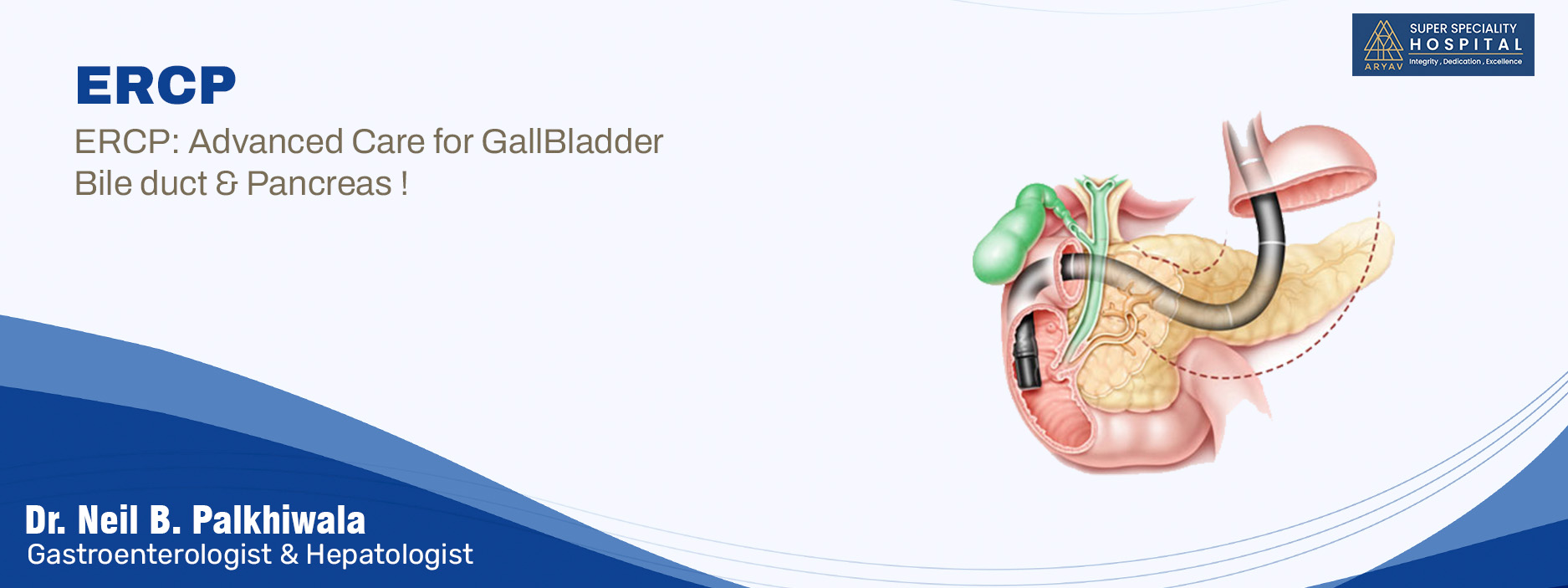
ERCP ( Endoscopic Retrograde Cholangiopancreatography) is a specialized endoscopic procedure that combines the use of a flexible endoscope and X-rays to diagnose and treat problems in the bile ducts, pancreatic duct, and gallbladder. It allows doctors to visualize and access these ducts to identify blockages, stones, or other abnormalities.

Why Is It Done?

ERCP is performed to investigate and manage conditions such as:

Types of ERCP

While the procedure itself is standard, ERCP can be:

The Procedure of ERCP

Benefits of ERCP

Guides Further Treatment – Provides detailed imaging for precise planning of additional therapies if needed.

Dr.Neil Palkhiwala- ERCP Endoscopy Specialist in Ahmedabad

Dr. Neil Palkhiwala is an experienced gastroenterologist specializing in ERCP and advanced endoscopic procedure for conditions related to the bile ducts, gallbladder, pancreas, and liver. With his expert skills and patient-centered approach, he ensures accurate diagnosis and effective treatment of complex bile and pancreatic diseases, guiding patients with care and precision.

Schedule your ERCP with Dr. Neil Palkhiwala- Director and Head Aryav Multispeciality Hospital, Ahmedabad . Call us to book your appointment or ask any questions to +91 91069 95254

Frequently Asked Questions

Is ERCP the same as endoscopy?
ERCP (Endoscopic Retrograde Cholangiopancreatography) is a specialized type of endoscopy. While a standard endoscopy is mainly for examining the digestive tract, ERCP combines endoscopy with X-ray imaging to diagnose and treat conditions of the bile ducts, pancreas, and gallbladder.
An ERCP procedure usually takes about 30 minutes to an hour, depending on the complexity and whether therapeutic steps like stone removal, stent placement, or tissue sampling are required. Additional recovery time is needed after sedation.
ERCP is generally safe when performed by experienced specialists, but it carries more risks than routine endoscopy because it involves both endoscopic and radiological techniques. Possible risks include pancreatitis, infection, bleeding, or injury to the ducts, though serious complications are relatively uncommon.