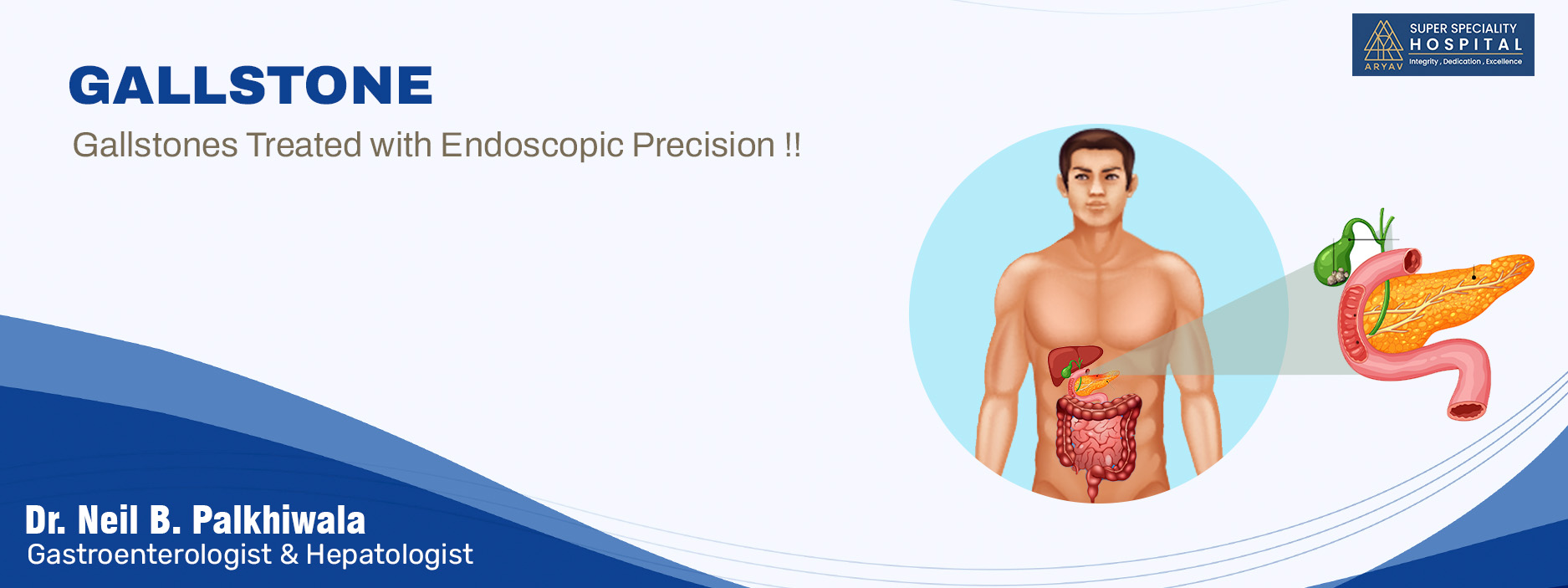
Gall Stone Treatment in Ahmedabad

Clearing the Path to Digestive Comfort

Gall Stone Treatment

What Are Gallstones?

Gallstones are hard, pebble-like substances that form in the gallbladder—a small organ located under the liver that stores bile. These stones develop when substances in bile, like cholesterol or bilirubin, become imbalanced and harden. Gallstones can range in size from a grain of sand to a golf ball and may be single or multiple.

Symptoms of Gallstones:

  • Sudden and intense pain in the upper right abdomen or back
  • Nausea and vomiting
  • Bloating or indigestion
  • Pain after eating fatty meals
  • In some cases, gallstones may cause no symptoms (known as "silent" gallstones)

Causes of Gallstones:

  • High cholesterol levels in bile
  • Poor gallbladder emptying
  • Obesity or rapid weight loss
  • Certain medical conditions (like liver disease or diabetes)
  • Genetics and age

Diagnosis of Gallstones:

  • Ultrasound is the most common and effective method.
  • CT scan or MRCP (Magnetic Resonance Cholangiopancreatography)
  • Blood tests to check liver function

Treatment Options for Gallstones:

  • Observation (for silent gallstones)
  • ERCP (Endoscopic Retrograde Cholangiopancreatography) to remove stones from bile ducts
  • Laparoscopic cholecystectomy (surgical removal of the gallbladder) – most common and effective treatment

Dr. Neil Palkhiwala - Gallstone Treatment Specialist

Gallstones may remain asymptomatic or cause significant discomfort and complications. Diagnostic imaging and clinical assessment help guide treatment decisions. Patients with gallstone disease often rely on the best Gastroenterologist in Ahmedabad for appropriate evaluation and care.

Frequently Asked Questions

Gallstones are hardened deposits in the gallbladder. About 80 percent are cholesterol stones formed from too much cholesterol in bile. The remaining 20 percent are pigment stones, more common in patients with liver disease or blood disorders.

In very rare cases, small cholesterol gallstones may partially dissolve, but this is not a reliable outcome to wait for. Oral dissolution therapy can work over many months but stones can recur. Surgery remains the most definitive treatment for symptomatic stones.

A gallstone attack is typically triggered when a stone temporarily blocks the cystic duct after a fatty meal. The pain is sudden, severe, and located in the upper right abdomen, often radiating to the right shoulder blade. It can last from 30 minutes to several hours.

Untreated symptomatic gallstones can cause acute cholecystitis, choledocholithiasis (stones in the bile duct leading to jaundice), cholangitis (a life-threatening infection), and acute pancreatitis. These are all medical emergencies that require prompt treatment.

An abdominal ultrasound is the gold standard for detecting gallstones. Blood tests check for signs of infection or bile duct blockage. If stones in the bile duct are suspected, an MRCP or ERCP may be recommended for a more detailed evaluation.

For stones in the bile duct, an ERCP procedure can remove them non-surgically. For stones in the gallbladder itself, surgical removal of the gallbladder (cholecystectomy) is the most effective and permanent solution.

Laparoscopic cholecystectomy is a minimally invasive keyhole surgery to remove the gallbladder. The surgeon makes 3 to 4 tiny incisions, inserts a camera and instruments, and removes the gallbladder. Patients typically go home the same or next day with a faster recovery than open surgery.

Yes, diet and lifestyle significantly influence gallstone risk. Eating a high-fiber diet, maintaining a healthy weight, avoiding crash diets, staying physically active, and limiting saturated fats and refined sugars can all help reduce your chance of developing gallstones.