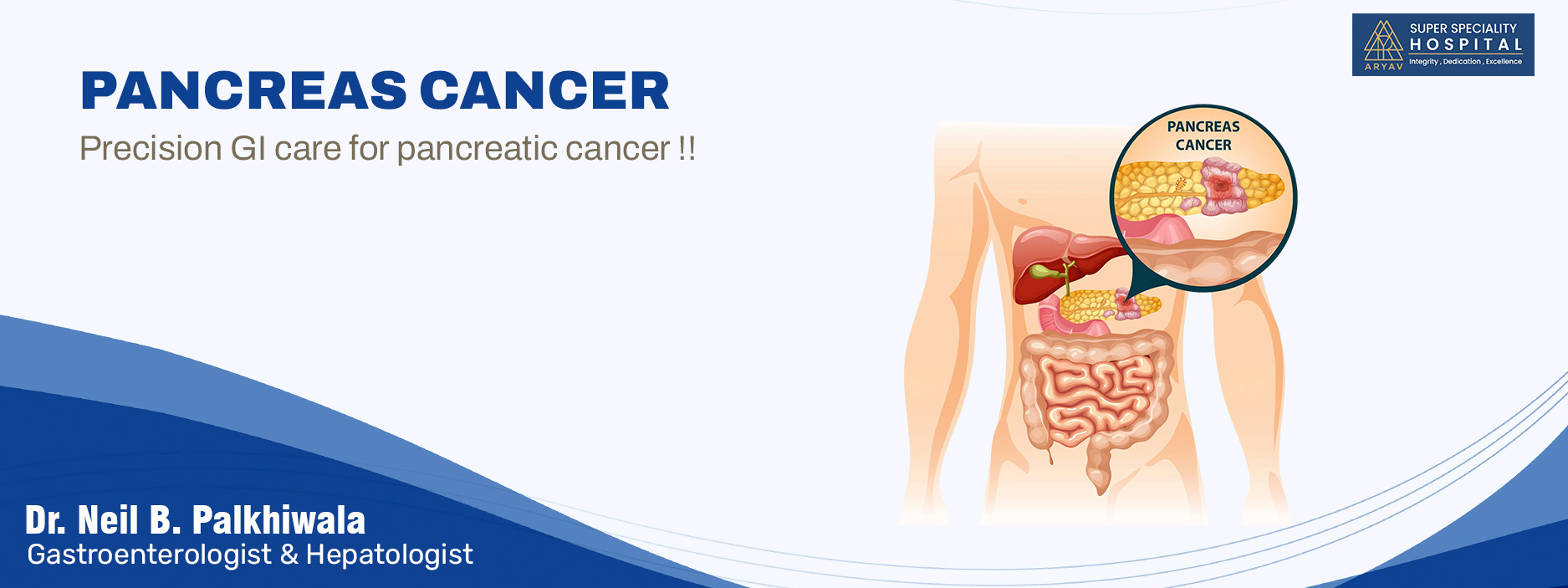
What Is Pancreatic Cancer?
Pancreatic cancer is a type of cancer that begins in the tissues of the pancreas, an organ located behind the stomach that helps with digestion and blood sugar regulation. It typically develops in the ducts that carry digestive enzymes, but can also arise from the hormone-producing cells (neuroendocrine tumors).
Symptoms Of Pancreatic Cancer :
- Abdominal or back pain
- Jaundice (yellowing of skin or eyes)
- Unexplained weight loss
- Loss of appetite
- Nausea or vomiting
Causes of Pancreatic Cancer
Genetic and Family History
- • Inherited gene mutations (such as BRCA2, PALB2, or Lynch syndrome)
- • Family history of pancreatic or other related cancers
Chronic Health Conditions
- • Chronic pancreatitis (long-term inflammation of the pancreas)
- • Diabetes, especially type 2
- • Obesity or being overweight
Lifestyle Factors
- • Smoking (a major known risk factor)
- • Heavy alcohol use (can lead to chronic pancreatitis)
- • Poor diet, particularly one high in red/processed meats
Age and Gender
- • Risk increases with age, especially after 60
- • Slightly more common in men
How to Diagnose Pancreatic Cancer?
Diagnosing pancreatic cancer involves a combination of clinical evaluation, imaging tests, and sometimes biopsy. Early detection is challenging because symptoms often appear late, but modern diagnostic tools can help identify the disease more effectively.
- Medical History & Physical Exam: Assessment of symptoms like abdominal pain, weight loss, jaundice, and review of family history and risk factors.
- Blood Tests: Tumor markers like CA 19-9 and Liver function tests to check for bile duct obstruction.
- Imaging Tests: CT Scan, MRI / MRCP, Endoscopic Ultrasound (EUS), and PET Scan.
- Endoscopic Procedures: ERCP (Endoscopic Retrograde Cholangiopancreatography) to view bile and pancreatic ducts and collect tissue via Biopsy.
Dr. Neil Palkhiwala - Pancreatic Cancer Specialist in Ahmedabad
Pancreatic cancer demands early diagnosis and coordinated care for better clinical outcomes. Advanced imaging and endoscopic evaluation play a vital role in disease assessment. Patients facing this condition often seek guidance from the best Gastroenterologist in Ahmedabad for accurate diagnosis and treatment planning.