Blood in Stool or Black Stool: Causes, Tests and When to See a Gastroenterologist
Medically reviewed by Dr. Neil B. Palkhiwala, MD, DM (Gastroenterology), MRCP SCE (UK), Consultant Gastroenterologist & Hepatologist, Aryav Super Speciality Hospital, Ahmedabad · Last reviewed: 25 Nov, 2026
Go to the emergency department now if you have:
Vomiting blood or "coffee-ground" material · large amounts of blood or black stool · dizziness, fainting or a racing heartbeat · severe abdominal pain · feeling cold, sweaty or confused.
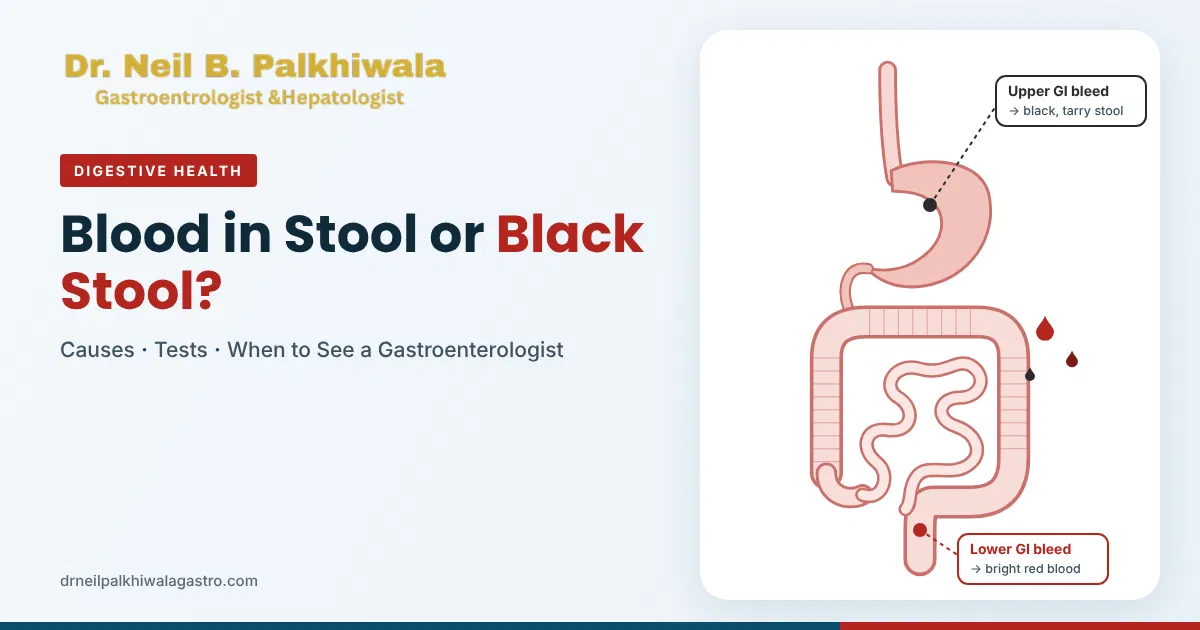
Blood in your stool always needs a medical check, but the colour gives an important clue about where the bleeding is coming from. Bright red blood usually comes from the lower bowel, rectum or anus. Black, tarry, sticky stool (called melena) usually means bleeding higher up, in the food pipe, stomach or first part of the small intestine. Some foods and medicines can also change stool colour without any bleeding.
This guide explains what each colour may mean, the common causes, which signs are an emergency, and how a gastroenterologist finds and treats the source.
What Does the Colour of Your Stool Tell You?
| What You See | Usually Means | Common Causes |
|---|---|---|
| Bright red blood on toilet paper, in the pan or coating the stool | Bleeding near the end of the bowel (rectum or anus) | Piles (haemorrhoids), anal fissure, polyps, colitis |
| Dark red or maroon blood mixed with stool | Bleeding from the colon or small intestine | Diverticula, colitis, polyps, tumours, abnormal blood vessels |
| Black, tarry, sticky, foul-smelling stool (melena) | Bleeding from the upper digestive tract | Stomach or duodenal ulcer, gastritis, varices, tears in the food pipe |
| Black but normal texture, no smell change | Often not blood | Iron tablets, bismuth medicines, dark foods |
| Hidden (occult) blood found only on a test | Slow bleeding anywhere in the gut | Ulcers, polyps, colon cancer, inflammation |
Black stool from bleeding turns black because the blood is digested as it travels down the gut. Blood from lower down has less distance to travel, so it stays red.
Common Causes of Blood in Stool
Causes of bright red blood (lower GI bleeding)
- Piles (haemorrhoids): swollen veins in the anus. Bright red blood on the paper or dripping into the pan, often without pain. Very common, but don't assume bleeding is "just piles" without a check.
- Anal fissure: a small tear in the anus, usually after passing hard stool. Sharp pain while passing stool, with a little bright red blood.
- Colon polyps: small growths in the large intestine. Most are harmless, but some can turn into cancer over time, which is why they are removed during colonoscopy.
- Colorectal cancer: may cause blood in stool, a change in bowel habit, weight loss or anaemia.
- Inflammatory bowel disease (ulcerative colitis, Crohn's disease): blood and mucus in stool, diarrhoea and abdominal pain.
- Infections: some bacterial infections cause bloody diarrhoea with fever.
- Diverticular disease and abnormal blood vessels (angiodysplasia): more common in older adults.
Causes of black, tarry stool (upper GI bleeding)
- Peptic ulcers: sores in the stomach or duodenum, the most common cause of sudden upper GI bleeding. They are often linked to H. pylori infection or painkillers (NSAIDs) such as ibuprofen, diclofenac or aspirin.
- Gastritis and erosions: inflammation of the stomach lining from painkillers, alcohol or infection.
- Oesophageal or gastric varices: swollen veins caused by liver cirrhosis. They can bleed heavily and need emergency treatment.
- Mallory-Weiss tear: a tear in the food pipe after forceful vomiting.
- Oesophagitis: severe inflammation of the food pipe from acid reflux.
- Tumours of the food pipe or stomach.
When Black or Red Stool Is Not Blood
Some common foods and medicines change stool colour without any bleeding:
| Cause | Colour | How to Tell |
|---|---|---|
| Iron tablets | Dark green-black | Normal texture, not sticky or foul-smelling |
| Bismuth medicines (some antacids and anti-diarrhoea medicines) | Black or slate-grey | Stops after the medicine is stopped |
| Beetroot, red food colouring, tomato in large amounts | Red or pink | Usually also red urine after beetroot; no blood on wiping |
| Dark foods (blueberries, black grapes, dark chocolate) | Dark | Normal texture |
| Activated charcoal | Black | History of taking charcoal |
Important: If you are not sure, or the stool is black and sticky, tarry or very foul-smelling, treat it as possible bleeding and get checked. Never stop a prescribed iron tablet without asking your doctor.
When to See a Doctor
Go to emergency now
- Vomiting blood or material that looks like coffee grounds
- Passing a large amount of blood, or repeated black stools
- Dizziness, fainting, a fast heartbeat, breathlessness or cold, clammy skin
- Severe abdominal pain
- Known liver disease (cirrhosis) with any bleeding
- Bleeding while on blood thinners (warfarin, apixaban, rivaroxaban, clopidogrel and similar)
See a gastroenterologist within a few days
- Bright red blood that keeps coming back
- Blood mixed with stool, or blood with mucus
- A change in bowel habit lasting more than a few weeks
- Unexplained weight loss, tiredness or anaemia (low haemoglobin)
- New rectal bleeding if you are over 40, or have a family history of colon cancer or polyps
- Ongoing abdominal pain, acidity or indigestion along with dark stools
Who Is at Higher Risk of GI Bleeding?
- Regular use of painkillers (NSAIDs) or aspirin
- Blood thinners and some anti-platelet medicines
- Liver disease (cirrhosis, fatty liver with fibrosis, hepatitis B or C)
- Heavy alcohol use
- H. pylori infection or a history of ulcers
- Age over 50, or a family history of colon cancer or polyps
- Inflammatory bowel disease
How a Gastroenterologist Finds the Cause
Your doctor will first ask about the colour and amount of blood, your bowel habits, medicines (especially painkillers and blood thinners), alcohol use and liver health, and then examine you. Depending on what they find, tests may include:
| Test | What It Shows |
|---|---|
| Blood tests (haemoglobin, platelets, clotting, liver and kidney function) | How much blood has been lost; liver health |
| Stool tests (occult blood, infection) | Hidden bleeding or infection |
| Upper GI endoscopy | The food pipe, stomach and duodenum: ulcers, varices, gastritis, tumours |
| Colonoscopy | The whole large intestine: piles, polyps, colitis, diverticula, tumours |
| Capsule endoscopy | The small intestine, when endoscopy and colonoscopy are normal |
| CT angiography | Active bleeding that can't be seen on endoscopy |
Upper endoscopy is usually the first test for black stool, and colonoscopy for red blood. Both can often treat the bleeding during the same procedure.
Learn more: Upper vs Lower Endoscopy: Key Differences · Colonoscopy Procedure Explained Step by Step · Capsule Endoscopy vs Traditional Endoscopy
How GI Bleeding Is Treated
Treatment depends on the cause and how severe the bleeding is:
- Endoscopic treatment (during endoscopy or colonoscopy):
- Clips to close a bleeding vessel or ulcer
- Injection of medicine to slow bleeding
- Heat or electrical cautery to seal a bleeding point
- Band ligation for bleeding varices
- Polyp removal (polypectomy) if a polyp is bleeding
- Medicines: acid-reducing tablets for ulcers, antibiotics for H. pylori, specific treatment for colitis, and medicines that lower pressure in varices
- Iron or blood transfusion if haemoglobin is low
- Interventional radiology or surgery in a small number of severe cases
Most bleeding from ulcers, varices and polyps can be controlled endoscopically, without open surgery.
See GI bleeding treatment in Ahmedabad, stomach ulcer treatment and liver cirrhosis treatment.
Can GI Bleeding Be Prevented?
- Don't take painkillers (NSAIDs) regularly without medical advice. If you need them long-term, ask about stomach protection.
- Get tested and treated for H. pylori if you have ulcers or ongoing indigestion.
- Limit alcohol, and get your liver checked if you drink regularly or have fatty liver.
- Eat enough fibre and water to avoid constipation and straining (helps prevent piles and fissures).
- Follow the colon cancer screening advice your doctor gives you, especially if you have a family history.
- If you have cirrhosis, attend your follow-up endoscopies so varices can be treated before they bleed.
Frequently Asked Questions
Talk to a Gastroenterologist
If you have noticed blood in your stool or black stools, a timely evaluation helps find the cause and treat it early.
Dr. Neil B. Palkhiwala
MD, DM (Gastroenterology), MRCP SCE (UK) · Consultant Gastroenterologist & Hepatologist
Aryav Super Speciality Hospital, Science City Road, opp. Lincoln House, Sola, Ahmedabad, Gujarat 380060
This article is for general information and doesn't replace advice from your own doctor. In an emergency, go to the nearest emergency department.
References
- MedlinePlus (U.S. National Library of Medicine). Bloody or tarry stools. https://medlineplus.gov/ency/article/003130.htm
- Cleveland Clinic. Melena (Black Stool). https://my.clevelandclinic.org/health/symptoms/25058-melena
- Healthdirect Australia. Gastrointestinal bleeding. https://www.healthdirect.gov.au/gastrointestinal-bleeding
- NHS. Bleeding from the bottom (rectal bleeding). https://www.nhs.uk/symptoms/bleeding-from-the-bottom-rectal-bleeding/