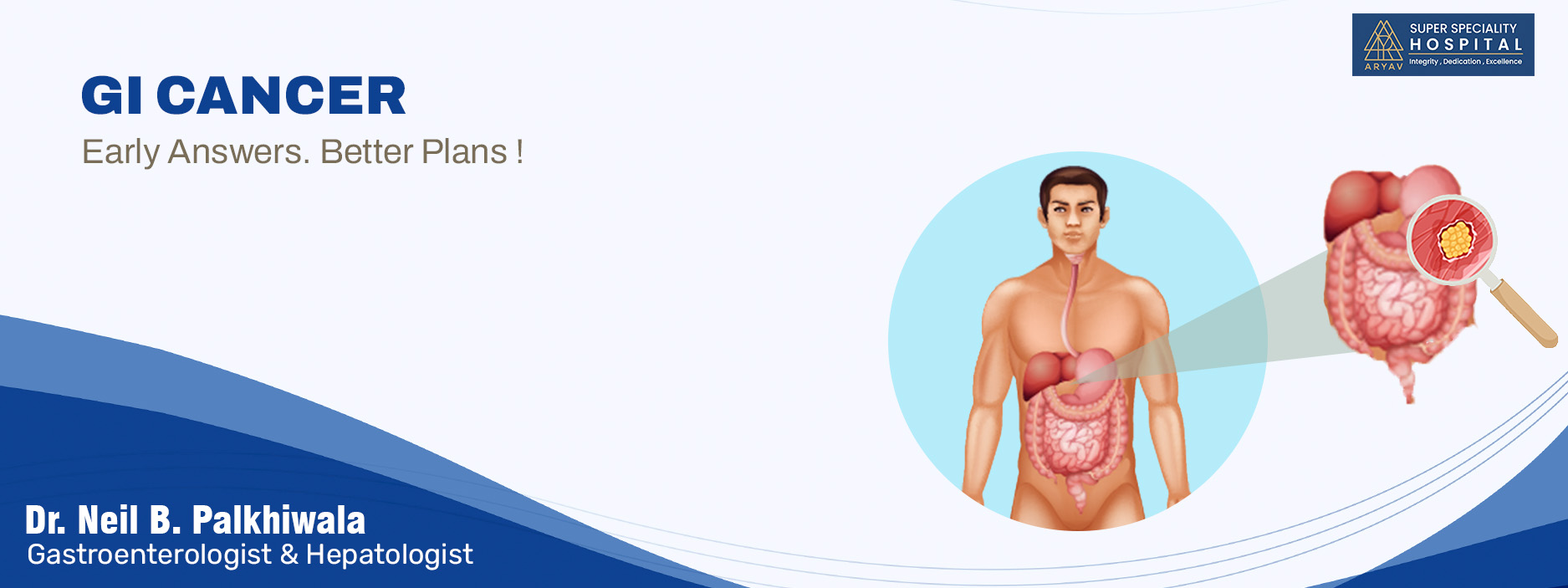
What is GI Cancer?
Gastrointestinal (GI) cancer refers to cancers that occur anywhere along the digestive tract and associated organs. This includes cancers of the esophagus, stomach, liver, pancreas, small intestine, colon, rectum, and anus.
Types of GI Cancer:
- Esophageal cancer: Affects the food pipe
- Stomach cancer: Develops in the stomach lining.
- Liver cancer: Originates in the liver cells.
- Pancreatic cancer: Starts in the pancreas.
- Colorectal cancer: Occurs in the colon or rectum.
- Anal cancer: Occurs in the anus.
Symptoms of GI Cancer:
- Abdominal pain or discomfort
- Unexplained weight loss
- Changes in bowel habits
- Blood in stool or vomit
- Difficulty swallowing (for esophageal cancer)
- Jaundice in liver or pancreatic cancer
Causes of GI Cancer:
- Genetic predisposition
- Chronic inflammation (such as from IBD)
- Smoking and alcohol consumption
- Poor diet and obesity
- Infections like Helicobacter pylori or hepatitis viruses
How Is GI Cancer Diagnosed?
- Medical History & Exam: Review symptoms like pain, bleeding, and weight loss; physical check for signs such as jaundice.
- Blood Tests: Check anemia, liver function, and tumor markers.
- Imaging: CT scan, MRI, and ultrasound to locate tumors and assess spread.
- Endoscopy & Biopsy: Visual inspection and tissue samples to confirm cancer under a microscope.
Treatment Options for GI Cancer
- Surgery: Removing the tumor or affected organ parts.
- Chemotherapy: Drugs to kill or shrink cancer cells.
- Radiation Therapy: Using radiation to destroy cancer cells.
- Targeted Therapy & Immunotherapy: Advanced drugs that attack cancer specifically.
Dr. Neil Palkhiwala - GI Cancer Treatment Specialist
GI cancers require early detection and multidisciplinary management for optimal outcomes. Advanced endoscopy and imaging assist in accurate staging. Patients diagnosed with gastrointestinal malignancies often consult the best Gastroenterologist in Ahmedabad for expert evaluation and coordinated care.