What is Bile Duct Disease?
Bile duct disease refers to a group of conditions that affect the bile ducts—the thin tubes that carry bile (a digestive fluid made by the liver) to the gallbladder and small intestine. These ducts play a vital role in digestion, especially in breaking down fats.
When the bile ducts are blocked, inflamed, narrowed, or damaged, it can lead to digestive issues, liver damage, or serious complications.
Symptoms of Bile Duct Disease:
- Yellowing of the skin and eyes (jaundice)
- Dark urine and pale stools
- Itching
- Abdominal pain, especially in the upper right side
- Fever and chills (in infection)
- Nausea or vomiting
Common Types of Bile Duct Disease:
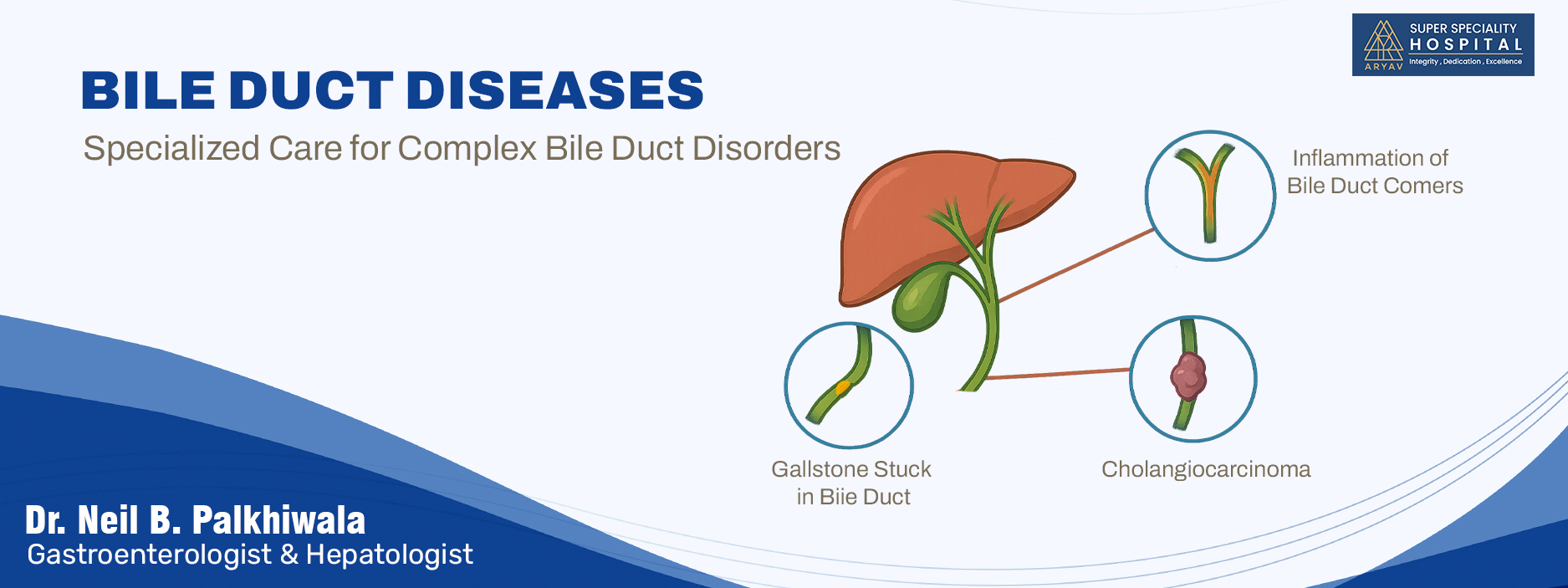
1. Bile Duct Obstruction
Blockage due to gallstones, strictures (narrowing), or tumors.
2. Cholangitis
Infection of the bile duct, often caused by obstruction.
3. Primary Sclerosing Cholangitis (PSC)
Chronic inflammation and scarring of bile ducts, often linked with inflammatory bowel disease (IBD).
4. Choledocholithiasis
Gallstones present in the bile duct.
5. Bile Duct Cancer (Cholangiocarcinoma)
A rare but serious cancer that starts in the bile ducts.
Bile Duct Disease Symptoms
Bile duct disease symptoms may include abdominal pain, jaundice, nausea, dark urine, pale stools, and unexplained weight loss. These signs often indicate blockages or inflammation in the bile ducts and should be evaluated by a specialist for proper diagnosis and treatment.
How to Diagnose Bile Duct Disease?
Doctors may recommend:
- Blood tests for liver health
- Ultrasound, CT scan, or MRI
- MRCP or ERCP for detailed bile duct imaging and treatment
- Biopsy in specific cases
Treatment Options for Bile Duct Disease
The treatment for bile duct disease depends on the specific cause, severity, and location of the problem. Common treatment options include:
1. Medications
Antibiotics for infections like cholangitis, or anti-inflammatory drugs for autoimmune conditions like PSC.
2. Endoscopic Procedures (e.g., ERCP)
Removal of gallstones from the bile duct, dilation (widening) of narrowed ducts (strictures), or placement of stents to keep ducts open.
3. Surgery
To remove tumors or repair damaged bile ducts. In severe cases, surgical removal of the bile duct or part of the liver.
4. Liver Transplant
Recommended in advanced cases where bile duct damage leads to liver failure or severe PSC.
5. Lifestyle Changes
Low-fat diet and management of underlying liver conditions can support overall digestive health.
Dr. Neil Palkhiwala - Bile Duct Disease Specialist Doctor in Ahmedabad
Dr. Neil Palkhiwala is a leading Best gastroenterologist in Ahmedabad, renowned for his expertise in advanced gastrointestinal and hepatobiliary endoscopy. He specializes in the diagnosis and treatment of bile duct diseases using state-of-the-art, minimally invasive techniques. Highly skilled in ERCP, endoscopic stenting, and other advanced procedures, Dr. Palkhiwala is committed to delivering accurate early diagnosis and personalized, effective care for every patient.