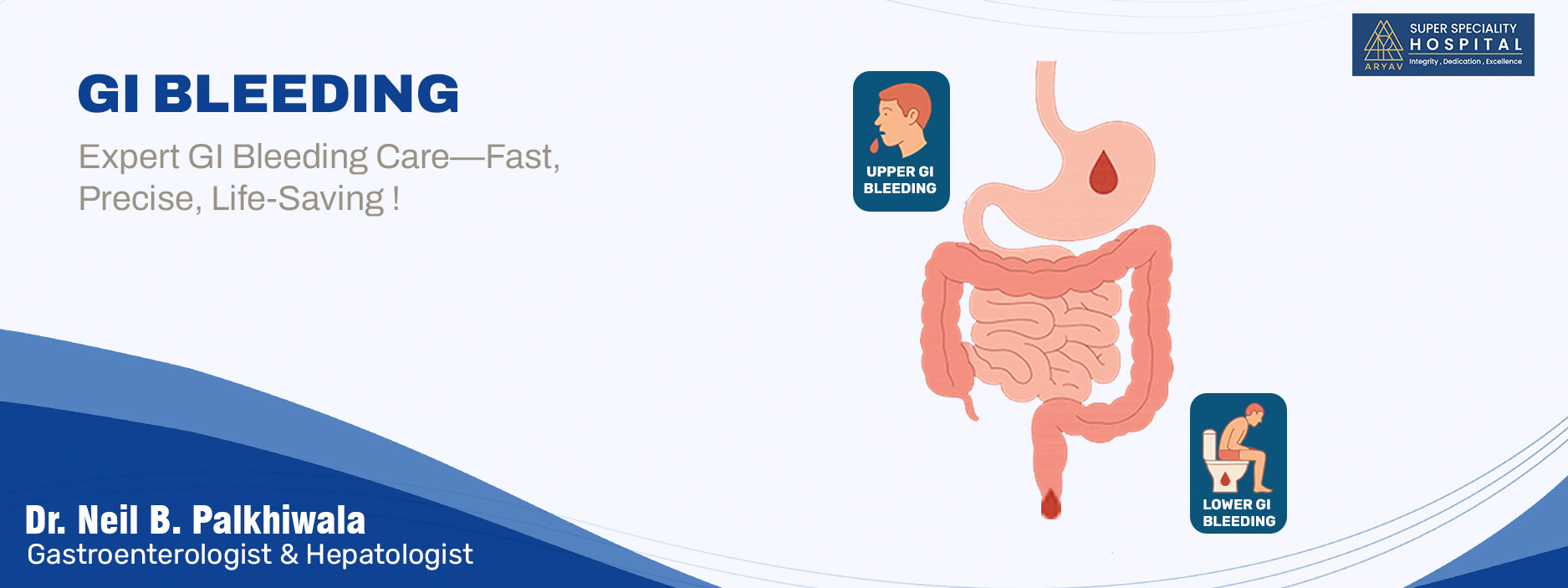
GI Bleeding
Gastrointestinal (GI) bleeding refers to any form of bleeding that occurs in the digestive tract, which includes the esophagus, stomach, small intestine, large intestine (colon), rectum, and anus. It can range from mild to severe and may appear as blood in vomit, black or tarry stools, or visible red blood in the stool.
Causes of GI Bleeding:
Upper GI bleeding
Often caused by ulcers, gastritis, esophageal varices, or tears in the esophagus (Mallory-Weiss tears).
Lower GI bleeding
Common causes include hemorrhoids, diverticulosis, colitis, Crohn’s disease, polyps, or colorectal cancer.
Symptoms of GI Bleeding:
- Vomiting blood
- Black, tarry stools (melena)
- Bright red blood in stool
- Dark-colored stools
- Abdominal pain or cramping
- Fatigue or weakness
- Shortness of breath & Dizziness
- Pale skin or paleness
- Low blood pressure (severe cases)
- Unexplained anemia
Diagnosis of GI Bleeding:
- Endoscopy or Colonoscopy – to locate and possibly treat the bleeding source.
- Capsule Endoscopy – for bleeding in the small intestine.
- CT Scans or Angiography – in complex or active bleeding cases.
Treatment of GI Bleeding:
Treatment depends on the source and severity of bleeding and may include:
- Endoscopic procedures to stop bleeding (e.g., clipping, cauterization)
- Medication to reduce stomach acid or treat underlying disease
- Surgery or interventional radiology in severe cases
Dr. Neil Palkhiwala - GI Bleeding Specialist in Ahmedabad
Gastrointestinal bleeding can range from mild to life-threatening and requires prompt evaluation. Endoscopic diagnosis plays a key role in identifying the source of bleeding. Patients experiencing GI bleeding often seek care from the best Gastroenterologist in Ahmedabad for timely diagnosis and intervention.