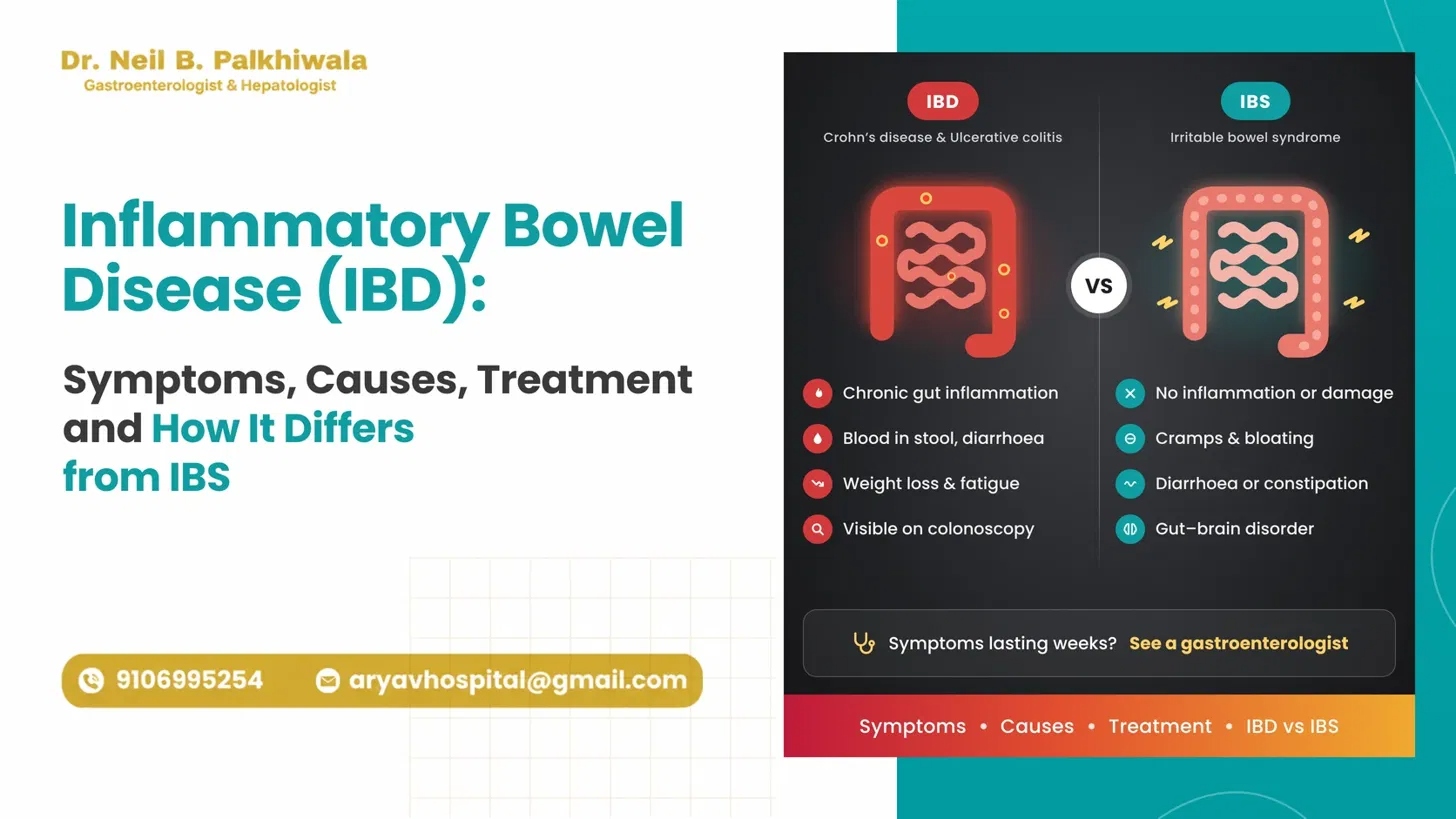
Inflammatory Bowel Disease (IBD): Symptoms, Causes, Treatment and How It Differs from IBS
Frequent loose stools, cramping stomach pain, tiredness that won't lift, maybe a streak of blood in the toilet. Many people live with these symptoms for months, blaming spicy street food, work stress, or simply a "weak stomach."
Sometimes the cause is something much more specific: inflammatory bowel disease (IBD).
IBD is a chronic, long-term condition, but with the right diagnosis and advanced treatment, most people can gain complete control over their symptoms and lead active, fulfilling lives. This guide explains what IBD is, how it fundamentally differs from IBS, which warning symptoms to watch for, and what modern medical treatment involves.
“Irritable Bowel Disease” or “Inflammatory Bowel Disease”? Clearing the Confusion
Many patients search online for “irritable bowel disease.” That term inadvertently mixes up two completely distinct medical conditions:
- IBS (Irritable Bowel Syndrome): A common functional gastrointestinal disorder. The intestinal lining looks structurally normal on tests, but the nerves and muscles of the gut are hypersensitive, causing pain, bloating, gas, diarrhoea, or constipation. Learn more about IBS Treatment in Ahmedabad.
- IBD (Inflammatory Bowel Disease): A serious autoimmune condition in which the immune system causes real, chronic inflammation, mucosal ulcers, and architectural tissue damage in the digestive tract. It is clearly visible on colonoscopy and confirmed via tissue biopsy.
| Feature | IBS (Irritable Bowel Syndrome) | IBD (Inflammatory Bowel Disease) |
|---|---|---|
| What it is | Functional disorder of gut sensitivity and movement | Chronic autoimmune inflammation of the digestive tract |
| Visible damage on tests | No visible damage; mucosa looks healthy | Yes: Visible ulcers, mucosal bleeding, and inflammation |
| Blood in stool | Not typical (unless from external piles) | Common, especially in Ulcerative Colitis |
| Weight loss, anaemia, fever | Not typical | Can frequently occur during active flares |
| Long-term complications | Does not damage bowel structure | Strictures, fistulas, malnutrition, higher colon cancer risk if uncontrolled |
| Primary Treatment | Diet, stress management, symptom relief | Anti-inflammatory medicines, biologics, immunosuppressants, sometimes surgery |
Because symptoms such as abdominal cramping and diarrhoea can overlap, only a formal clinical evaluation by a specialist gastroenterologist can accurately distinguish them. The rest of this guide focuses on inflammatory bowel disease.
What Is Inflammatory Bowel Disease?
Inflammatory bowel disease is an umbrella term for chronic disorders involving progressive inflammation of the gastrointestinal tract. The two primary forms are Crohn’s Disease and Ulcerative Colitis.
IBD characteristically follows a relapsing-remitting pattern: alternating between flare-ups (when symptoms are actively disruptive) and periods of remission (when symptoms settle down and mucosa heals). This is why IBD requires consistent, long-term medical management rather than one-time medication.
Crohn’s Disease
- Can affect any segment of the GI tract from mouth to anus, most frequently involving the terminal ileum (end of small intestine) and cecum.
- Inflammation is transmural, extending through the full thickness of the bowel wall.
- Presents in patches (skip lesions), with healthy mucosal tissue interspersed between inflamed segments.
- Can lead to structural complications including strictures (narrowing), fistulas (abnormal channels connecting organs), abscesses, and malabsorption.
Ulcerative Colitis
- Confined exclusively to the colon (large intestine) and rectum.
- Inflammation is continuous without skip areas and limited strictly to the innermost mucosal lining.
- Typically originates in the rectum (proctitis) and extends continuously upward into the sigmoid, descending, or entire colon (pancolitis).
- Visible rectal bleeding, mucus discharge, and intense fecal urgency (tenesmus) are hallmark features.
Common Symptoms of IBD
Symptoms vary depending on whether the disease is Crohn's or Colitis, the extent of bowel involvement, and whether the patient is in an active flare:
- Persistent Diarrhoea: Loose, frequent stools lasting weeks, often waking the patient up at night.
- Abdominal Pain and Cramping: Often localized to the right lower abdomen (in Crohn's) or left lower abdomen (in Colitis).
- Blood or Mucus in Stool: Bright red rectal bleeding or dark mucus mixed with stools.
- Fecal Urgency & Tenesmus: A sudden, distressing need to rush to the bathroom and feeling unable to empty completely.
- Chronic Fatigue and Lethargy: Due to continuous systemic inflammation and nutritional deficits.
- Unintentional Weight Loss: Caused by fear of eating, malabsorption, and active catabolism.
- Low-Grade Fever: Particularly during inflammatory flares.
- Iron-Deficiency Anaemia: From microscopic or overt blood loss and impaired intestinal iron absorption.
Extra-Intestinal Manifestations (Symptoms Outside the Gut)
Because IBD is a systemic immune-mediated illness, up to 30% of patients experience symptoms affecting other organ systems:
- Joints: Inflammatory arthritis, peripheral joint swelling, or spinal stiffness (ankylosing spondylitis).
- Skin: Painful red nodules on the shins (erythema nodosum) or ulcerating skin lesions (pyoderma gangrenosum).
- Eyes: Eye redness, pain, and photophobia (episcleritis, uveitis).
- Mouth: Recurrent aphthous ulcers inside the cheeks and gums.
- Liver & Bile Ducts: Conditions like Primary Sclerosing Cholangitis (PSC). Explore our Liver Clinic in Ahmedabad for biliary assessments.
What Causes Inflammatory Bowel Disease?
While the exact single cause of IBD remains under scientific investigation, it is widely recognized as a complex interaction of four key factors:
- Dysregulated Immune Response: The immune system mistakenly perceives normal intestinal flora as hostile invaders, triggering unchecked chronic inflammation.
- Genetic Susceptibility: Over 200 gene loci are associated with IBD risk. Individuals with a first-degree relative with IBD face higher chances of developing the illness.
- Gut Microbiome Dysbiosis: Reductions in microbiome biodiversity and protective bacteria compromise the mucosal barrier.
- Environmental Factors: Urbanization, diets heavy in refined sugars and ultra-processed fats, frequent early antibiotic use, and smoking (which worsens Crohn's disease) are notable risk factors.
Important Clarification: Neither psychological stress nor spicy food causes IBD. However, acute stress and dietary irritants can certainly trigger or aggravate symptom flares in individuals who already have the condition.
How Is IBD Diagnosed?
There is no single blood test that conclusively confirms IBD. An expert gastroenterologist integrates clinical history with a series of targeted investigations:
- Complete Blood Counts & Inflammatory Markers: Evaluates anaemia (haemoglobin), elevated C-Reactive Protein (CRP), and ESR.
- Stool Testing & Fecal Calprotectin: Rules out bacterial infections (like C. difficile) and quantitatively measures Fecal Calprotectin—a highly sensitive biological marker of active intestinal mucosal inflammation.
- Colonoscopy with Mucosal Biopsy: The gold standard diagnostic procedure. A high-definition flexible camera allows the gastroenterologist to visualize mucosal redness, ulcerations, and vascular patterns from the rectum to the terminal ileum, obtaining painless tissue biopsies to confirm diagnosis.
- Upper GI Endoscopy: Indicated when Crohn's disease is suspected of involving the stomach, esophagus, or duodenum.
- Cross-Sectional Imaging (CT / MR Enterography): Evaluates the entire small intestine, assessing wall thickness, strictures, and fistulous tracts without radiation (in MRI).
- Capsule Endoscopy: A swallowed pill-sized video camera utilized in selected patients to visualize obscure mucosal lesions deep in the small intestine.
Modern Treatment Options for IBD
While IBD cannot be cured permanently, modern medical advancements allow the vast majority of patients to achieve deep mucosal healing and symptom-free remission. Treatment goals focus on halting inflammation, preventing irreversible bowel damage, averting surgery, and restoring complete quality of life.
1. Medical Therapies
- 5-Aminosalicylates (5-ASAs): Medications such as mesalamine are the cornerstone first-line treatment for mild to moderate Ulcerative Colitis, reducing topical surface inflammation.
- Corticosteroids: Potent anti-inflammatory agents (prednisolone, budesonide) used exclusively for short durations to rapidly bring acute flares under control. They are never used for long-term maintenance due to side effects.
- Immunomodulators: Medications such as azathioprine or 6-mercaptopurine that modulate overactive immune pathways, helping sustain long-term steroid-free remission.
- Biologic Therapies & Small Molecules: Cutting-edge targeted therapies including anti-TNF agents (infliximab, adalimumab), anti-integrins (vedolizumab), and JAK inhibitors. These target specific inflammatory proteins, offering profound healing for moderate to severe Crohn's and Colitis.
- Supportive Nutritional Therapy: Intravenous or oral iron supplements, Vitamin B12 injections, Vitamin D3, and calcium to reverse deficiencies caused by malabsorption.
2. Endoscopic Interventions & Surgery
When strictures or luminal narrowing develop, advanced therapeutic endoscopy with balloon dilation can frequently restore bowel patency without open surgery. Surgical resection (such as bowel resection in Crohn's or proctocolectomy in severe Ulcerative Colitis) is reserved for complications like perforation, persistent bleeding, refractory flares, or premalignant dysplasia.
3. Colon Cancer Surveillance
Patients who have had extensive colitis for 8 to 10 years carry a higher risk of colorectal cancer due to chronic mucosal irritation. Periodic surveillance colonoscopies with chromoendoscopy ensure any microscopic precancerous changes (dysplasia) are detected and removed early.
Diet and Lifestyle Tips for Living with IBD
Dietary adjustments work hand-in-hand with medical treatments to support gut healing and prevent flare triggers:
During an Active Flare-Up:
- Choose soft, easily digestible meals: moong dal khichdi, well-cooked white rice, fresh curd, boiled potatoes, and clear soups.
- Temporarily reduce high-fibre roughage, raw salads, tough skins, nuts, and seeds until inflammation subsides.
- Avoid greasy, fried street foods, heavy gravies, and excessively spicy foods.
- Drink adequate water, ORS, and coconut water to replace lost electrolytes.
During Remission:
- Gradually reintroduce a diverse, nutrient-rich diet incorporating whole grains, fruits, and vegetables.
- Maintain a personal food diary to pinpoint idiosyncratic intolerance triggers.
- Ensure sufficient lean protein intake (dal, paneer, tofu, eggs, fish) to support intestinal mucosal repair.
- Never stop or lower prescribed IBD maintenance medications on your own simply because you feel symptom-free.
Lifestyle Factors: Avoid smoking (a primary driver of Crohn's progression), practice stress management through yoga or meditation, and strictly avoid over-the-counter NSAID painkillers (such as ibuprofen or naproxen) which trigger intestinal mucosal erosions.
When to See a Gastroenterologist?
Do not wait out persistent digestive symptoms. Seek consultation with an expert gastroenterologist if you notice:
Clinical Indications for Immediate Evaluation:
- Diarrhoea lasting continuously for more than 2 to 3 weeks.
- Visible blood or mucus in your stool.
- Unexplained weight loss, recurring low-grade fevers, or profound fatigue.
- Nocturnal bowel movements that wake you from deep sleep.
- Persistent abdominal cramping not relieved by bowel evacuation.
- Known family history of Crohn's, Ulcerative Colitis, or colon cancer coupled with new bowel changes.
Emergency Warning: Seek immediate hospital care if you experience massive rectal bleeding, intractable severe abdominal pain, high spiking fevers, or persistent vomiting with severe dehydration.

Comprehensive IBD Care by Dr. Neil Palkhiwala
MD, DM, MRCP SCE (UK) | Senior Consultant Gastroenterologist & Hepatologist
Accurate IBD management requires super-specialist expertise in endoscopic interpretation, biopsy analysis, modern biologic dosing, and personalized dietary guidance. Dr. Neil Palkhiwala provides cutting-edge Crohn's and Ulcerative Colitis care at Aryav Super Speciality Hospital, Science City Road, Sola, Ahmedabad.
Book Appointment +91 91069 95254Frequently Asked Questions
The Bottom Line
Inflammatory bowel disease is much more than a sensitive stomach. It is a genuine, chronic inflammatory condition that deserves precise diagnosis and structured, long-term clinical care. If you are experiencing persistent diarrhoea, rectal bleeding, ongoing abdominal cramps, or unexplained fatigue, don't wait it out.
Timely evaluation by a gastroenterologist ensures accurate differentiation between IBD, IBS, or infection, allowing effective medical therapy to begin before permanent bowel damage develops.
Living with Ongoing Bowel Symptoms?
Consult Dr. Neil Palkhiwala, leading Gastroenterologist in Ahmedabad, for comprehensive IBD diagnosis, advanced endoscopy, and individualized treatment planning.
Book An Appointment Call +91 91069 95254