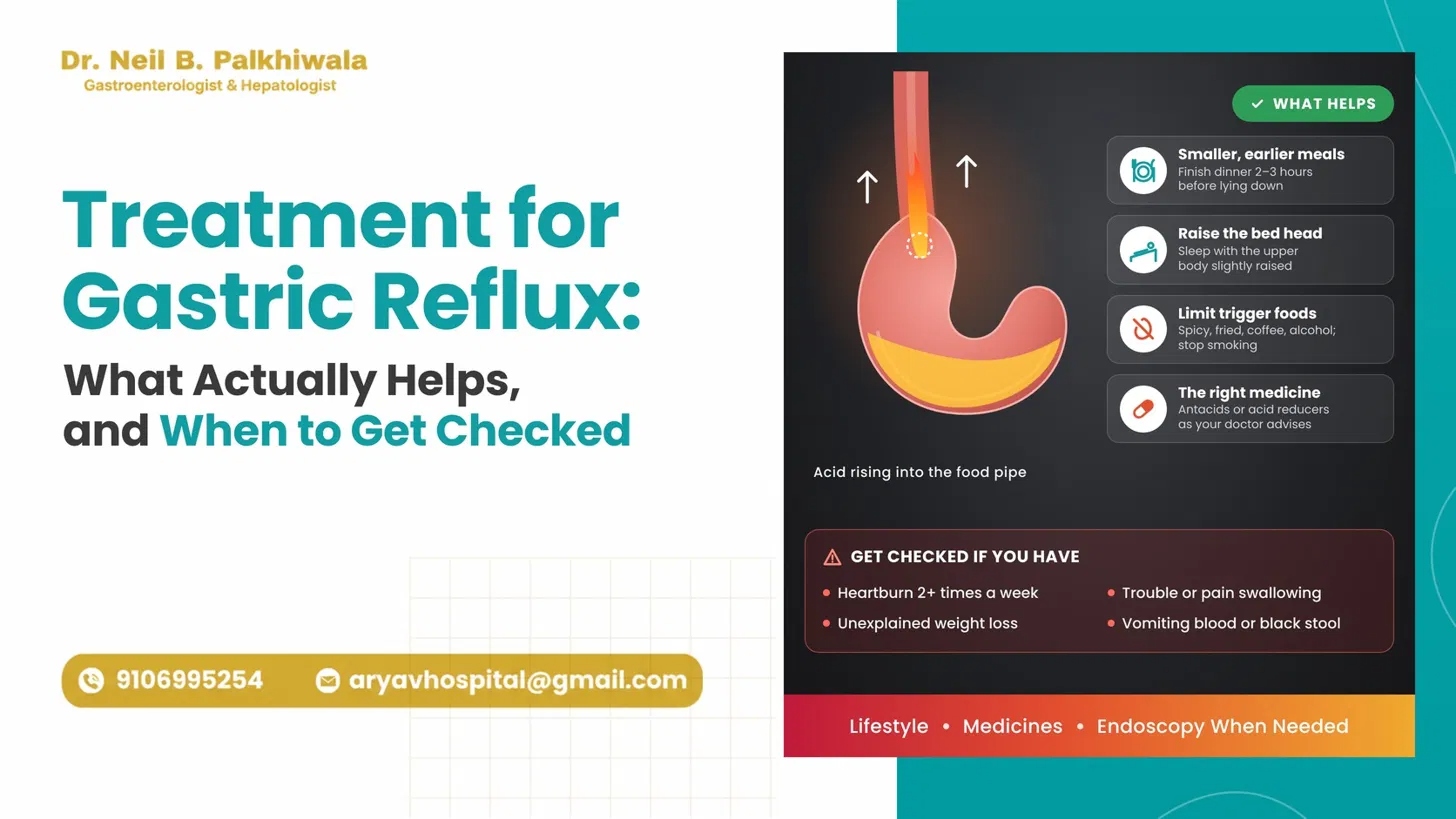
Treatment for Gastric Reflux: What Actually Helps, and When to Get Checked
That burning sensation radiating behind your breastbone after dinner. A sour, acidic taste creeping up your throat the moment you lie down in bed. That persistent, dry night-time cough that shows up without any cold or fever.
If this sounds familiar, you are in good company. Gastric reflux is one of the single most frequent digestive complaints seen in clinical practice. Most people attempt to handle it on their own for months or even years—relying on random over-the-counter antacids, baking soda, or home remedies. Some of these measures provide temporary relief; many do not. And occasionally, chronic reflux is warning you about an underlying condition that deserves a thorough medical check.
This article explains what acid reflux is, which lifestyle adjustments actually work, how medications are safely structured, and when it is medically wise to consult an experienced gastroenterologist in Ahmedabad.
What Is Gastric Reflux?
At the anatomical junction between your food pipe (esophagus) and your stomach sits a circular band of muscle: the Lower Esophageal Sphincter (LES). Think of it as a one-way security valve. Its job is to relax open briefly when you swallow food, and then snap shut immediately so that harsh gastric hydrochloric acid, pepsin, and bile stay where they belong.
When this valve transiently relaxes at the wrong time, becomes physiologically weakened, or gets displaced by a hiatus hernia, stomach acid and digestive juices flow backwards into the unprotected esophagus. That is acid reflux.
Occasional mild reflux after an indulgent feast is normal. When acid regurgitation happens frequently (more than twice a week), interferes with sleep, or causes inflammation of the esophageal mucosa, it is classified as Gastro-Esophageal Reflux Disease (GERD).
Common Symptoms Include:
- Heartburn (Pyrosis): A warm, burning ache in the center of the chest, often rising towards the neck or throat.
- Acid Regurgitation: A sour, bitter fluid washing back into the mouth or back of the throat.
- Globus Sensation: An irritating feeling of a "lump" or food stuck in the throat or mid-chest.
- Excessive Belching & Upper Abdominal Bloating: Frequent air swallowing and epigastric heaviness.
- Atypical Respiratory Symptoms: Morning hoarseness, chronic throat clearing, unexplained asthma-like wheezing, or a persistent dry cough at night.
Why Does Acid Reflux Happen?
Reflux is rarely triggered by a single solitary cause. It is almost always a combination of lifestyle, mechanical, and dietary factors:
- Large or Late Meals: Going to bed on a full stomach forces gastric acid to puddle against the LES valve under the influence of gravity.
- Excess Abdominal Pressure: Increased visceral weight pushes the stomach upward, compromising the natural valve angle.
- Smoking and Alcohol: Nicotine directly chemically relaxes the lower esophageal sphincter muscle and diminishes protective saliva production.
- Trigger Foods: Certain dietary items delay stomach emptying or relax the sphincter.
- Hiatus Hernia: An anatomical condition where the upper stomach slips through the diaphragm into the chest cavity, neutralizing the LES valve.
- Pregnancy: Elevated progesterone relaxes smooth muscle, while the growing uterus elevates intra-abdominal pressure.
- Medications: Certain blood pressure drugs (calcium channel blockers), sedatives, and NSAID painkillers irritate the mucosa.
Symptom Journaling: Keeping a simple 7-day food and symptom diary is one of the most effective ways to identify personal triggers rather than unnecessarily eliminating entire food groups.
What Actually Helps: Evidence-Based Lifestyle Measures
Lifestyle and behavioral modifications form the cornerstone of long-term reflux management, and they remain vital even when medications are prescribed:
- Time Your Meals Wisely: Finish your last bite of dinner at least 2 to 3 hours before reclining or sleeping. Allow gravity to help your stomach empty.
- Switch to Smaller, Frequent Meals: Massive meals distend the stomach wall and stretch open the LES valve. Smaller, well-spaced portions minimize gastric pressure.
- Elevate the Head of Your Bed (15–20 cm): If nocturnal reflux or morning throat burning troubles you, elevate the bedpost legs at the head end by 6 inches, or use a firm wedge pillow. Stacking regular pillows merely bends your neck and compresses your abdomen, worsening reflux.
- Identify and Moderate Your Specific Triggers: Common culprits include deep-fried oily foods, excess red chillies, chocolate, caffeine, carbonated colas, citrus fruits, and alcohol. You do not need to give up everything—cut back on items that clearly trigger your burning.
- Achieve Gradual Weight Management: Losing even 5% to 10% of excess body weight significantly relieves intra-abdominal pressure on the stomach.
- Avoid Tight Clothing: Very tight belts, corsets, and shapewear directly squeeze the stomach, forcing acid upward.
- Quit Smoking: Eliminating tobacco restores normal sphincter pressure and prevents mucosal inflammation.
Medicines for Acid Reflux: What You Need to Know
Modern pharmaceutical options are highly effective when tailored correctly to the frequency and severity of your symptoms:
| Medicine Class | How It Works | When It Is Prescribed |
|---|---|---|
| Antacids & Alginates | Rapidly neutralizes stomach acid or forms a floating gel barrier (raft) on top of gastric contents. | Immediate, short-acting relief for occasional heartburn or after an indulgent meal. |
| H2 Blockers (e.g. Famotidine) | Blocks histamine receptors in the stomach wall, reducing acid production for 8 to 12 hours. | Mild to moderate symptoms, especially nocturnal acid breakthrough. |
| Proton Pump Inhibitors (PPIs) | Profoundly shuts down acid-producing pumps in the stomach lining, allowing inflamed tissue to heal. | Prescribed as a structured 4 to 8 week course for frequent GERD, erosive esophagitis, or peptic ulcers. |
Clinical Rule on Taking PPIs:
Proton pump inhibitors (such as pantoprazole, rabeprazole, or esomeprazole) must be taken 30 to 45 minutes before breakfast on an empty stomach. Taking them after meals dramatically reduces their effectiveness. Never continue taking daily acid tablets for months without periodic physician review.
When to Get Checked by a Gastroenterologist?
While acidity is commonplace, certain red-flag warning signs indicate that you should stop self-treating and seek specialist evaluation:
Red-Flag Warning Signs – Consult a Specialist Promptly:
- Difficulty or pain while swallowing (dysphagia/odynophagia): Feeling that food is getting stuck in the chest.
- Unintended weight loss without dieting or changes in physical activity.
- Repeated or forceful vomiting, or vomiting dark coffee-ground material.
- Black, tarry stools (melena) or visible blood in the toilet.
- Unexplained chronic fatigue or low haemoglobin (iron-deficiency anaemia).
- Symptoms on most days for several consecutive weeks, especially if you need daily antacids.
- New reflux symptoms beginning after age 45 to 50.
- A long standing history of reflux (over 5 years), or a family history of esophageal or stomach cancer.
Emergency Note: If you experience central chest pain accompanied by profuse sweating, shortness of breath, dizziness, or radiating pain to the left arm, neck, or jaw, seek emergency hospital care immediately to rule out a heart attack.
What Diagnostic Tests Might Be Advised?
If symptoms are severe, persistent, or accompanied by red flags, an accurate diagnosis reveals the precise anatomical and physiological cause:
- Upper GI Endoscopy: A gentle, painless procedure under light sedation using a high-definition video camera to inspect the lining of the food pipe, stomach, and duodenum. It detects erosions (esophagitis), stomach ulcers, hiatus hernia, and precancerous cellular changes (Barrett's Esophagus), while allowing painless tissue biopsies.
- High-Resolution Esophageal Manometry: Measures muscle contraction pressures and valve function along the food pipe, essential if swallowing issues or motility disorders (like achalasia) are suspected.
- 24-Hour pH-Impedance Monitoring: The definitive gold-standard test to quantify exactly how much acid and non-acid fluid flows back into the esophagus over a normal day.
- H. Pylori Testing: A quick breath or stool antigen test to check for Helicobacter pylori bacteria, a common driver of stomach ulcers and burning.
Can Long-Standing Reflux Cause Serious Complications?
When stomach acid continuously bathes the delicate esophageal mucosa over years, it can lead to complications:
- Erosive Esophagitis: Mucosal inflammation, raw erosions, and painful bleeding ulcers.
- Esophageal Strictures: Dense scar tissue that narrows the food pipe, making it difficult to swallow solid food.
- Barrett's Esophagus: In a small percentage of chronic refluxers, the normal squamous cells of the esophagus mutate into specialized intestinal-type cells to protect against acid. Because Barrett's carries a slight risk of progressing to esophageal adenocarcinoma, regular endoscopic surveillance is advised.
Reassuring Note: The overwhelming majority of patients with reflux do not develop severe complications, especially when diagnosed early and managed with a structured clinical plan.

Consult Dr. Neil Palkhiwala
MD, DM, MRCP SCE (UK) | Senior Consultant Gastroenterologist & Hepatologist
If chronic acidity or reflux has been disrupting your life, consult Dr. Neil Palkhiwala in Ahmedabad. With advanced expertise in therapeutic endoscopy, manometry, and reflux care, Dr. Neil focuses on identifying the root cause to provide lasting relief at Aryav Super Speciality Hospital, Science City Road, Sola, Ahmedabad.
Book Consultation +91 91069 95254Frequently Asked Questions
The Bottom Line
Gastric reflux and persistent acidity are not life sentences, nor are they something you must quietly suffer through with daily antacids. Simple, structured lifestyle adjustments, meal timing, and accurate medical courses provide dramatic, lasting relief.
If acidity has been bothering you for weeks, or you notice difficulty swallowing, weight loss, or chronic throat irritation, don't keep guessing. A timely consultation with a specialist provides clear answers and a customized recovery plan.
Speak With a Gastroenterologist in Ahmedabad
If reflux or acidity has been bothering you, consult Dr. Neil Palkhiwala, Senior Consultant Gastroenterologist at Aryav Super Speciality Hospital, Ahmedabad.
Book Online Consultation Call +91 91069 95254