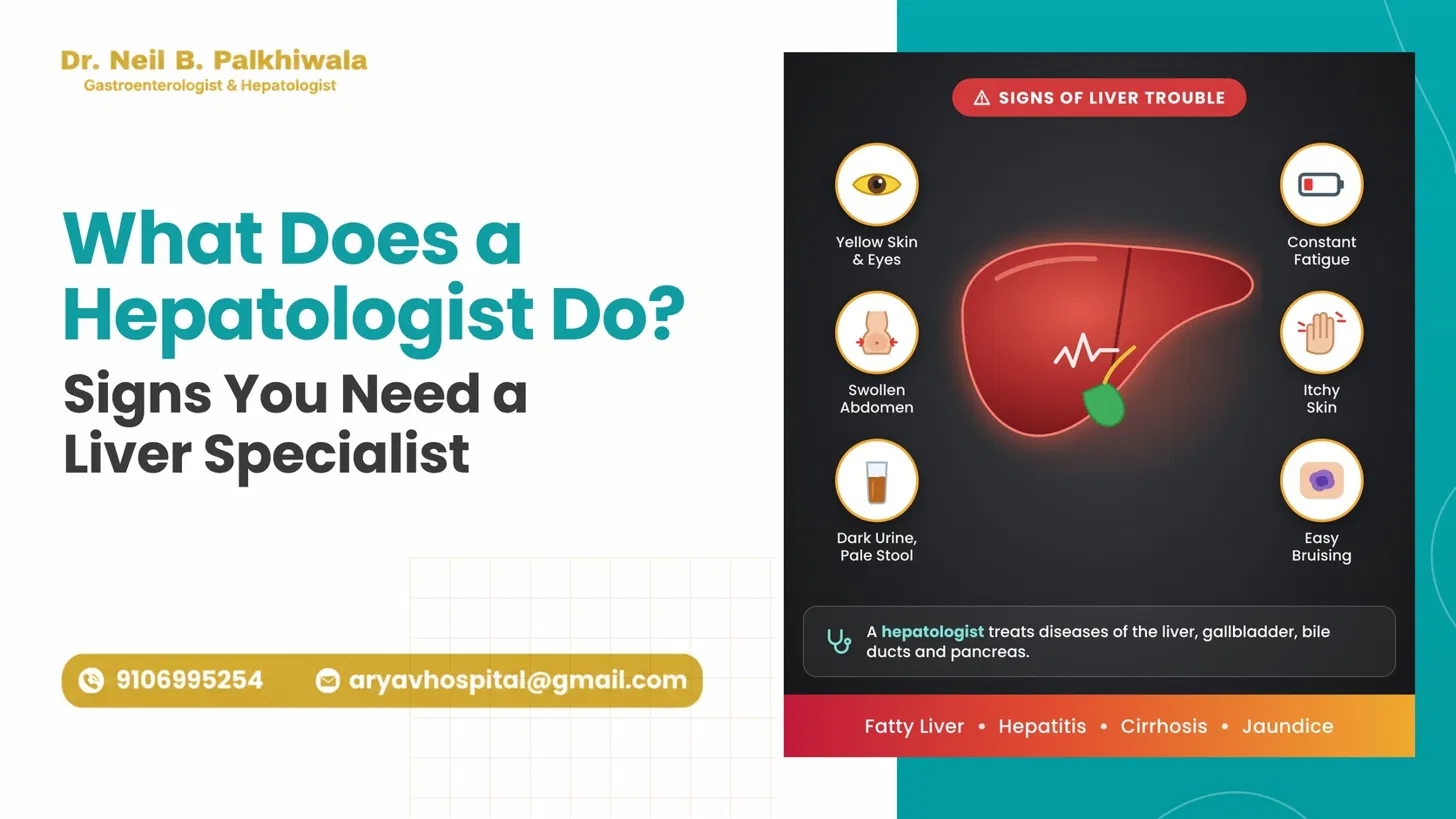
What Does a Hepatologist Do? Signs You Need a Liver Specialist
The liver is one of the hardest-working organs in your body, and one of the quietest. It can sustain progressive damage for years without causing noticeable pain or overt symptoms. Many people learn they have a liver problem entirely by chance—from a routine health check-up, abnormal blood test, or an abdominal ultrasound done for something else.
That is where a hepatologist comes in. This comprehensive clinical guide explains what a hepatologist does, which conditions they treat, the critical warning signs you should never ignore, and when it makes medical sense to consult a dedicated Liver Specialist in Ahmedabad.
What Is a Hepatologist?
A hepatologist is a specialized physician dedicated to the clinical evaluation, diagnosis, and evidence-based management of disorders affecting the liver, as well as its interconnected hepatobiliary organs: the gallbladder, bile ducts, and the pancreas.
Hepatology is a specialized super-specialty that stems from gastroenterology. Many leading hepatologists train first as comprehensive gastroenterologists—giving them deep expertise across the entire digestive tract—before completing advanced super-specialty fellowships in hepatology, liver cirrhosis, viral hepatitis, and liver transplant medicine.
Hepatologist vs Gastroenterologist: What’s the Difference?
While their clinical domains frequently intersect, understanding their specific areas of focus helps you choose the right specialist:
| Feature | Gastroenterologist | Hepatologist |
|---|---|---|
| Primary Focus | The entire gastrointestinal system: food pipe (esophagus), stomach, small and large intestines, rectum, liver, and pancreas. | Specifically concentrated on the liver, gallbladder, biliary tree, and pancreas. |
| Common Conditions Seen | Chronic acidity, GERD, stomach ulcers, IBS, IBD (Crohn's/Colitis), severe constipation, GI bleeding. | Fatty liver (MASLD/MASH), Hepatitis B & C, liver cirrhosis, jaundice, portal hypertension, liver tumours. |
| Typical Diagnostic Tools | Upper GI endoscopy, colonoscopy, capsule endoscopy, manometry. | Advanced Liver Function Tests (LFTs), FibroScan (elastography), Doppler ultrasound, multiphase CT/MRI, liver biopsy. |
Clinical Advantage: Many senior doctors, like Dr. Neil Palkhiwala, practice with dual super-specialty certification as both a Gastroenterologist and Hepatologist. This dual training is immensely valuable because liver diseases and gastrointestinal complications (such as esophageal variceal bleeding or gut microbiome imbalances) frequently overlap.
Why Your Liver Deserves Attention?
Your liver performs more than 500 vital physiological functions every single day, including:
- Detoxification: Filtering toxins, metabolic byproducts, alcohol, and prescription medications from the bloodstream.
- Digestion: Synthesizing bile salts necessary to break down and absorb dietary fats and fat-soluble vitamins.
- Metabolic Control: Storing surplus glucose as glycogen and regulating blood cholesterol and triglyceride levels.
- Protein Synthesis: Producing serum albumin and essential blood-clotting factors to prevent spontaneous bleeding.
- Immune Defense: Filtering intestinal bacteria and neutralizing circulating pathogens via Kupffer cells.
The "Silent" Organ: Because the liver has massive functional reserve capacity, it continues to perform even when up to 70% damaged. It possesses very few pain receptors inside its tissue, meaning liver injury can progress quietly for years without pain. By the time symptoms like jaundice or abdominal swelling appear, damage may already be advanced.
Common Conditions a Hepatologist Treats
1. Fatty Liver Disease (MASLD / NAFLD / MASH)
Fatty liver disease occurs when excessive triglycerides accumulate inside hepatic cells. Globally termed Metabolic Dysfunction-Associated Steatotic Liver Disease (MASLD), it is closely driven by:
- Excess visceral body fat, particularly around the waistline.
- Insulin resistance, prediabetes, and Type 2 diabetes.
- Elevated blood triglycerides and low HDL cholesterol.
- High blood pressure and sedentary lifestyle.
While early fat accumulation is largely asymptomatic, in some patients it triggers progressive inflammation—MASH (Metabolic Dysfunction-Associated Steatohepatitis)—which accelerates fibrosis and cirrhosis. Both the American College of Gastroenterology (ACG) and the NIDDK emphasize that MASLD is widespread and frequently uncovered incidentally.
The Encouraging Reality: In its early and moderate stages, fatty liver is completely reversible through structured weight reduction (7–10%), metabolic optimization, and specialized medical guidance. Learn more: Fatty Liver Treatment in Ahmedabad.
2. Viral Hepatitis (Hepatitis B & Hepatitis C)
Chronic viral hepatitis infections silently destroy liver cells over decades. If left undetected, they remain the leading causes of cirrhosis and hepatocellular carcinoma (liver cancer):
- Hepatitis B: Preventable through safe vaccination. For chronic carriers, modern oral antiviral medications (tenofovir, entecavir) effectively suppress viral replication and safeguard liver longevity.
- Hepatitis C: A clinical triumph of modern medicine—HCV can now be completely cured in over 95% of patients with a simple 12-week course of oral Direct-Acting Antivirals (DAAs).
Explore comprehensive options: Viral Hepatitis Treatment in Ahmedabad.
3. Alcohol-Related Liver Disease (ALD)
Chronic alcohol consumption leads to predictable cellular damage, progressing from simple steatosis to acute alcoholic hepatitis and irreversible alcoholic cirrhosis. Complete alcohol cessation is the single most vital intervention. A hepatologist provides non-judgmental clinical support, nutritional rehabilitation, and complication prevention. Explore: Alcoholic Liver Disease Care.
4. Liver Fibrosis and Cirrhosis
Cirrhosis represents late-stage hepatic scarring where healthy tissue is replaced by stiff, nodular scar tissue. Major complications managed by a hepatologist include:
- Ascites: Fluid accumulation causing visible abdominal distension and shortness of breath.
- Esophageal Varices: Severely enlarged veins in the food pipe that can rupture and cause life-threatening internal bleeding.
- Hepatic Encephalopathy: Confusion, altered sleep cycles, or tremors caused by toxin accumulation in the brain.
- Liver Cancer Surveillance: Structured ultrasound and AFP screening every 6 months to detect early-stage treatable nodules.
Explore: Liver Cirrhosis Management in Ahmedabad.
5. Other Liver & Biliary Disorders
- Unexplained jaundice and acute hepatitis.
- Autoimmune hepatitis, Primary Biliary Cholangitis (PBC), and Primary Sclerosing Cholangitis (PSC).
- Portal hypertension and splenomegaly.
- Complex gallstones, choledocholithiasis, and bile duct strictures requiring ERCP stone removal.
Warning Signs of Liver Disease You Should Not Ignore
Because early liver disease rarely rings alarm bells, paying attention to subtle physical indicators is vital. Consult a specialist promptly if you notice:
Clinical Warning Signs of Liver Dysfunction:
- Jaundice: Yellow discoloration of the whites of your eyes (sclera) and skin.
- Dark Urine: Persistent amber or tea-coloured urine despite drinking enough fluids.
- Pale, clay-coloured stools: Indicating bile flow blockage.
- Persistent, overwhelming fatigue not relieved by adequate rest.
- Loss of appetite, chronic nausea, or unintended weight loss.
- Dull ache or fullness in the upper right side of your abdomen.
- Abdominal swelling (ascites) or bilateral swelling of the feet and ankles (edema).
- Intense, generalized itching (pruritus) without an apparent skin rash.
- Easy bruising or frequent bleeding from the gums and nose.
- EMERGENCY SIGNS: Vomiting blood, passing black tarry stools, or sudden disorientation, slurred speech, and severe drowsiness in someone with liver problems.
When Should You See a Hepatologist?
You should consider scheduling an appointment at a dedicated Liver Clinic in Ahmedabad if:
- Your routine Liver Function Tests (LFTs) show elevated SGOT/AST, SGPT/ALT, Alkaline Phosphatase, or Bilirubin—even if you feel completely healthy.
- An ultrasound or health check-up scan shows Grade 1, 2, or 3 fatty liver, especially if you also live with diabetes, obesity, or high cholesterol.
- You have tested positive for Hepatitis B surface antigen (HBsAg) or Hepatitis C antibodies (Anti-HCV).
- You consume alcohol regularly and want an accurate, non-invasive assessment of your liver's structural health.
- You have developed jaundice or unexplained abdominal swelling.
- You have a strong family history of liver cirrhosis, liver failure, or liver cancer.
- You take long-term medications that require regular hepatotoxic surveillance.
How Does a Hepatologist Evaluate Your Liver?
Modern hepatology leverages non-invasive, painless diagnostic technologies to accurately grade liver health without surgery or discomfort:
- Targeted Liver Blood Serologies: LFTs, viral PCR viral loads (HBV DNA / HCV RNA), coagulation panels (PT/INR), autoimmune antibody panels, and serum ferritin.
- High-Resolution Ultrasound: Assesses liver contours, echogenicity (fat content), spleen size, and portal vein flow.
- FibroScan (Transient Elastography): A painless, 10-minute non-invasive test that sends gentle shear waves through the liver to quantify liver stiffness (fibrosis scarring in kPa) and fat percentage (CAP score in dB/m). It has largely replaced the need for painful needle biopsies in routine practice.
- Cross-Sectional Imaging (Dynamic CT / Liver MRI): High-definition multiphase scans to characterize liver nodules and vascular anomalies.
- Diagnostic Upper GI Endoscopy: Screens for portal hypertensive varices in the esophagus or stomach, allowing immediate prophylactic banding (EVL) to avert internal bleeding.
Treatment: What to Expect
Liver treatment is strictly personalized according to the underlying cause and fibrosis stage:
- Fatty Liver (MASLD): Personalized metabolic therapy, structured gradual weight reduction, dietary re-engineering, and targeted hepatoprotective medications.
- Hepatitis B & C: Prescription oral antiviral regimens that either cure the infection (HCV) or suppress the virus to undetectable levels (HBV).
- Alcohol-Related Liver Disease: Medical detoxification, nutritional restoration, and proactive management of portal hypertension.
- Decompensated Cirrhosis: Diuretic regimens for ascites, endoscopic variceal band ligation (EVL) for bleeding prevention, lactulose for encephalopathy, and coordination for liver transplant evaluation when needed.
Simple Ways to Protect Your Liver Every Day
- Maintain a healthy waistline: Visceral fat around the abdomen is the strongest predictor of fatty liver disease.
- Follow a balanced, whole-food diet: Prioritize whole grains, leafy greens, pulses, seasonal fruits, and nuts while drastically limiting refined white flour (maida), trans-fats, and sugary soft drinks.
- Eliminate or strictly limit alcohol: If you already have fatty liver or elevated enzymes, abstain from alcohol entirely.
- Stay physically active: At least 150 minutes of moderate aerobic exercise (brisk walking, cycling, swimming) each week significantly depletes liver fat.
- Complete Hepatitis B vaccination: A safe, 3-dose vaccine provides lifelong protection against Hepatitis B.
- Avoid unverified "Liver Detox" syrups: Herbal concoctions and unregulated over-the-counter detox powders are frequent causes of acute drug-induced liver injury (DILI). Always check with a specialist before taking supplements.

Consult Dr. Neil Palkhiwala
MD, DM, MRCP SCE (UK) | Senior Consultant Gastroenterologist & Hepatologist
Recognized as one of the best hepatologists in Ahmedabad, Dr. Neil Palkhiwala heads the dedicated Liver Specialist Clinic in Ahmedabad at Aryav Super Speciality Hospital, Sola. Offering comprehensive care for fatty liver, cirrhosis, viral hepatitis, and same-day point-of-care FibroScan 502 Touch testing.
Book Appointment +91 91069 95254Frequently Asked Questions
The Bottom Line
Abnormal liver enzyme reports, a diagnosis of fatty liver on an ultrasound, a positive Hepatitis B or C test, or subtle yellowing of the eyes are all clear biological signals that your liver requires dedicated clinical attention. They are never something to simply wait out or treat with home remedies.
Timely evaluation by a specialist reveals whether your liver problem is mild, reversible, or in need of specialized medical intervention. Dr. Neil Palkhiwala offers comprehensive liver diagnostics—including non-invasive point-of-care FibroScan, advanced serologies, and therapeutic endoscopy—delivering personalized care plans tailored to your life at Aryav Super Speciality Hospital, Ahmedabad.
Concerned About Your Liver Health?
Book a clinical consultation or choose an online consultation with Dr. Neil Palkhiwala, leading Hepatologist & Liver Specialist in Ahmedabad.
Book Online Consultation Call +91 91069 95254