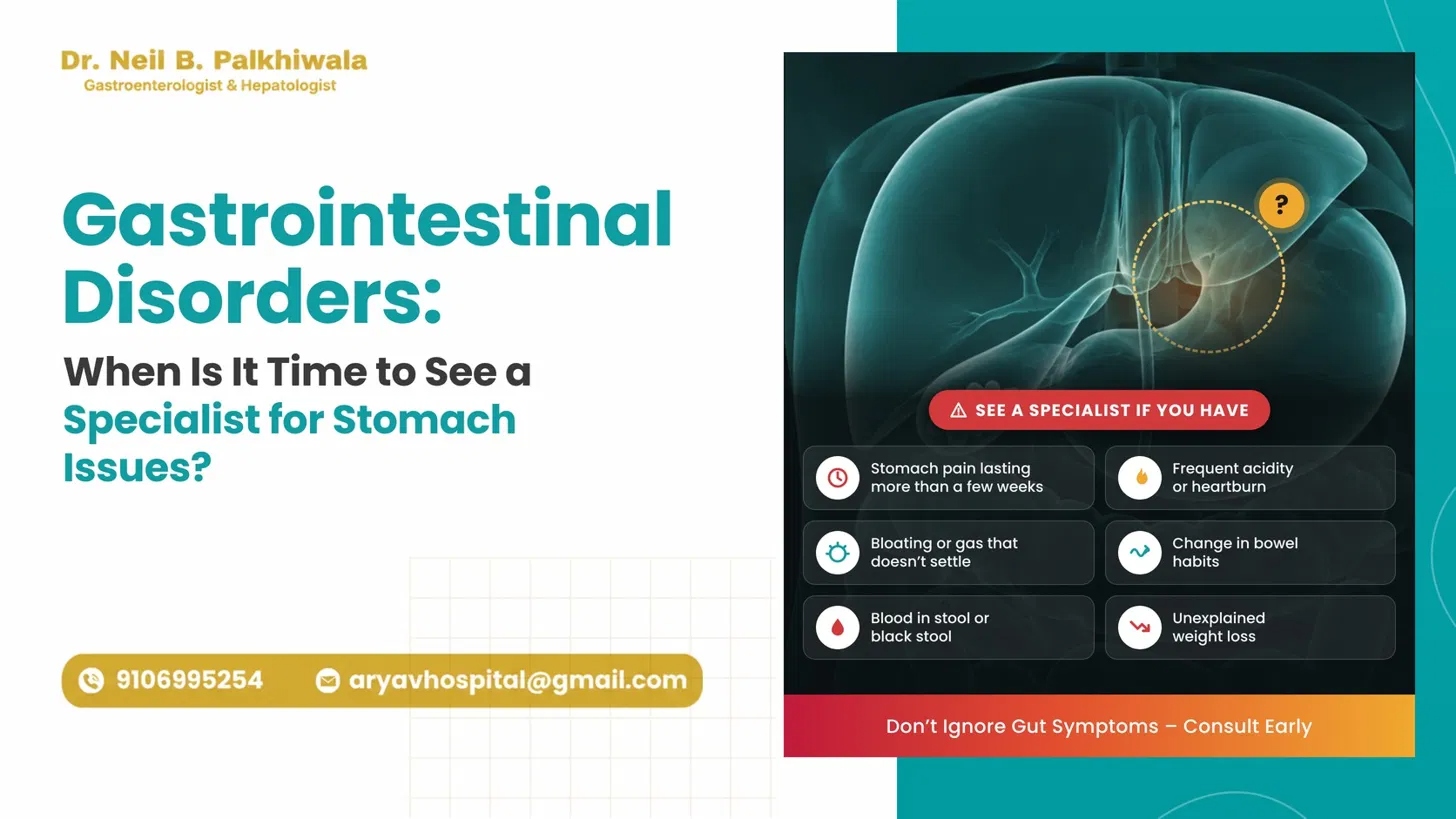
Gastrointestinal Disorders: When Is It Time to See a Specialist for Stomach Issues?
Almost everyone has had a bad stomach day. A heavy festive meal, an unusually stressful work week, or an impromptu spicy street snack, and your stomach promptly lets you know about it. Most of the time, it settles comfortably on its own within a day or two.
But what if it doesn’t? What if abdominal bloating returns every single week, chest acidity wakes you from deep sleep, or stomach pain has subtly become something you simply “learn to live with”?
These persistent symptoms can be the earliest biological signals of an underlying gastrointestinal disorder, and they deserve an accurate clinical examination rather than endless rounds of over-the-counter antacids and home remedies.
This article explains what digestive disorders are, which warning symptoms matter most, and when it makes medical sense to consult a qualified specialist for stomach issues in Ahmedabad.
What Are Gastrointestinal Disorders?
The gastrointestinal (GI) tract is the continuous digestive tube your food travels through from entry to exit: the food pipe (esophagus), stomach, small intestine, large intestine (colon), and rectum. Crucial accessory organs—the liver, gallbladder, and pancreas—support digestion by secreting enzymes, hormones, and bile salts.
A disease or physiological dysfunction occurring anywhere along this interconnected route is classified as a gastrointestinal disorder. Broadly, these fall into two categories:
- Functional Gastrointestinal Disorders: Conditions where the structural tissue and organs look completely normal on standard scans and endoscopy, but the nerves, muscles, and motility of the gut are hypersensitive or uncoordinated (e.g. Irritable Bowel Syndrome, functional dyspepsia).
- Structural and Inflammatory Disorders: Conditions where targeted diagnostic tests demonstrate visible physical alterations, mucosal ulcers, strictures, stones, or active tissue inflammation (e.g. peptic ulcers, gallstones, inflammatory bowel disease, gastrointestinal bleeding).
Why Guessing Fails: Functional and structural disorders often produce identical outward symptoms (such as bloating, gas, and cramping). Attempting to guess the cause at home without clinical evaluation risks delaying timely treatment for progressive conditions.
Common Gastrointestinal Disorders
Below are the most frequent digestive conditions for which patients consult a gastroenterology specialist:
- Acid Reflux and GERD: An incompetent lower esophageal sphincter valve allowing acidic gastric juices to wash upward into the chest and throat, causing chronic heartburn, chest burning, regurgitation, and nocturnal coughing. Learn more: GERD Treatment in Ahmedabad.
- Indigestion (Dyspepsia): Persistent upper abdominal discomfort, feeling full too early in a meal (early satiety), epigastric burning, nausea, and frequent belching.
- Peptic Ulcer Disease: Painful open sores developing along the lining of the stomach or duodenum, frequently triggered by Helicobacter pylori bacterial infection or unmonitored use of NSAID painkillers. Learn more: Stomach Ulcer Treatment.
- Irritable Bowel Syndrome (IBS): A common disorder of gut-brain interaction characterized by recurrent abdominal cramping linked to changes in bowel frequency (chronic diarrhoea, constipation, or alternating patterns) and severe bloating. Learn more: IBS Care in Ahmedabad.
- Chronic Constipation: Infrequent, dry, painful-to-evacuate stools lasting several weeks, often accompanied by straining, rectal fullness, and hemorrhoidal discomfort.
- Inflammatory Bowel Disease (IBD): Chronic autoimmune diseases causing progressive mucosal inflammation and ulcerations throughout the bowel wall (Crohn's Disease and Ulcerative Colitis). Learn more: IBD Treatment in Ahmedabad.
- Gallstones & Liver Conditions: Including gallstone colic, cholecystitis, and metabolic fatty liver disease (MASLD), which often develops quietly without overt symptoms. Explore our dedicated Liver Clinic in Ahmedabad and Gallstone Care.
- Coeliac Disease & Food Intolerances: Autoimmune intestinal damage triggered by dietary gluten, or malabsorption issues like lactose intolerance.
Symptoms You Should Not Ignore (Red-Flag Warning Signs)
Please do not wait for stomach pain or digestive discomfort to become unbearable. Consult a gastroenterologist promptly if you experience any of the following warning signs:
Clinical Red-Flag Indicators – Seek Early Evaluation:
- Black, tarry stools (melena) or visible bright red blood mixed with stools.
- Vomiting blood or dark material resembling coffee grounds.
- Difficulty or pain while swallowing food or liquids (dysphagia/odynophagia).
- Unplanned, unexplained weight loss without dieting.
- Persistent, uncontrollable vomiting leading to dehydration.
- Yellowing of the eyes or skin (jaundice) and dark tea-coloured urine.
- Severe or steadily worsening abdominal pain that interrupts sleep.
- A noticeable change in bowel habits (persistent diarrhoea or new-onset constipation) lasting over 2 to 3 weeks.
- Unexplained chronic fatigue, dizziness, or documented iron-deficiency anaemia.
- A family history of gastrointestinal, colon, or stomach cancer, or new digestive complaints starting after age 45 to 50.
When Should You Consult a Specialist for Stomach Issues?
Visiting your general physician or family doctor is often a practical, sensible first step. However, you should consider transitioning your care to a dedicated gastroenterologist when:
- Your digestive symptoms persist continuously for more than 2 to 3 weeks.
- Symptoms repeatedly return despite adhering to basic dietary and lifestyle advice.
- You find yourself taking over-the-counter antacids, painkillers, or laxatives multiple times a week.
- Stomach distress actively disrupts your professional productivity, normal eating patterns, or quality of sleep.
- Any of the clinical red-flag indicators outlined above are present.
Specialist Reassurance: A consultation with a gastroenterologist does not automatically mean you will undergo an invasive test or surgery. In fact, many patients leave their first visit with a clear, reassuring diagnosis, an evidence-based roadmap, and tailored dietary modifications without needing any procedure.
What to Expect at Your First Consultation?
Understanding what happens during a specialist gastroenterology consultation helps alleviate anxiety:
- A Thorough Medical Conversation: The doctor will listen to the chronology of your symptoms: exactly when they began, what triggers or relieves them, your dietary patterns, sleep quality, stress levels, previous surgeries, and family history. Tip: Always bring a list of your current prescriptions and supplements.
- A Targeted Physical Examination: A gentle, focused examination of the abdomen (checking for tenderness, organomegaly, fluid, or localized masses).
- Investigations Only When Clinically Necessary: Based strictly on your symptoms, the specialist may advise targeted tests such as routine blood counts, stool calprotectin, abdominal ultrasound, a painless Upper GI Endoscopy, a screening Colonoscopy, or a non-invasive FibroScan. Tests are selected to pinpoint root causes, and not every patient requires all of them.
- A Transparent, Collaborative Care Plan: You should leave the consultation with a clear understanding of your condition, the expected treatment timeline, and lifestyle measures to adopt. Quality digestive care is always a collaborative two-way partnership.
Everyday Habits That Support Digestive Health
While lifestyle adjustments cannot substitute for medical management when a disease is present, these evidence-based habits foster long-term digestive comfort:
- Maintain regular meal times: Avoid starving for long intervals followed by massive, late-night dinners right before bed.
- Incorporate diverse dietary fibre: Enjoy whole grains, pulses, fresh green vegetables, seasonal fruits, and nuts to sustain a healthy gut microbiome.
- Prioritize adequate hydration: Drink at least 2.5 litres of water across the day to ensure smooth intestinal transit.
- Limit tobacco, alcohol, and unprescribed painkillers: Frequent use of NSAID pain tablets (ibuprofen, diclofenac) is a leading cause of erosive gastritis and ulcer bleeding.
- Stay physically active: A brisk 30-minute daily walk stimulates peristalsis and accelerates gastric emptying.
- Pay attention to personal food sensitivities: Record foods that provoke bloating or heartburn and discuss them with your doctor.
- Avoid self-medicating for weeks: Antacids mask symptoms without curing the root pathology.

Consult Dr. Neil Palkhiwala
MD, DM (Gastroenterology), MRCP SCE (UK) | Senior Consultant Gastroenterologist & Hepatologist
With over 15+ years of clinical excellence and 15,000+ treated patients across Gujarat, Dr. Neil Palkhiwala provides expert root-cause diagnosis and personalized treatment for chronic acidity, stomach pain, IBS, liver diseases, and advanced endoscopic interventions at Aryav Super Speciality Hospital, Science City Road, Sola, Ahmedabad.
Book Appointment +91 91069 95254Frequently Asked Questions
The Bottom Line
Persistent digestive symptoms are your body's way of requesting attention. Whether you are dealing with chronic acid reflux, unexplained abdominal pain, bloating, or irregular bowel habits, you do not have to simply endure the discomfort or guess your way through self-medication.
A timely consultation with a qualified gastroenterologist provides definitive clarity, separates functional conditions from structural diseases, and ensures you receive a personalized, evidence-based recovery plan.
Consult a Gastroenterologist in Ahmedabad
If digestive symptoms have been troubling you, consult Dr. Neil Palkhiwala, leading Gastroenterologist & Hepatologist at Aryav Super Speciality Hospital, Ahmedabad.
Book Consultation Call +91 91069 95254