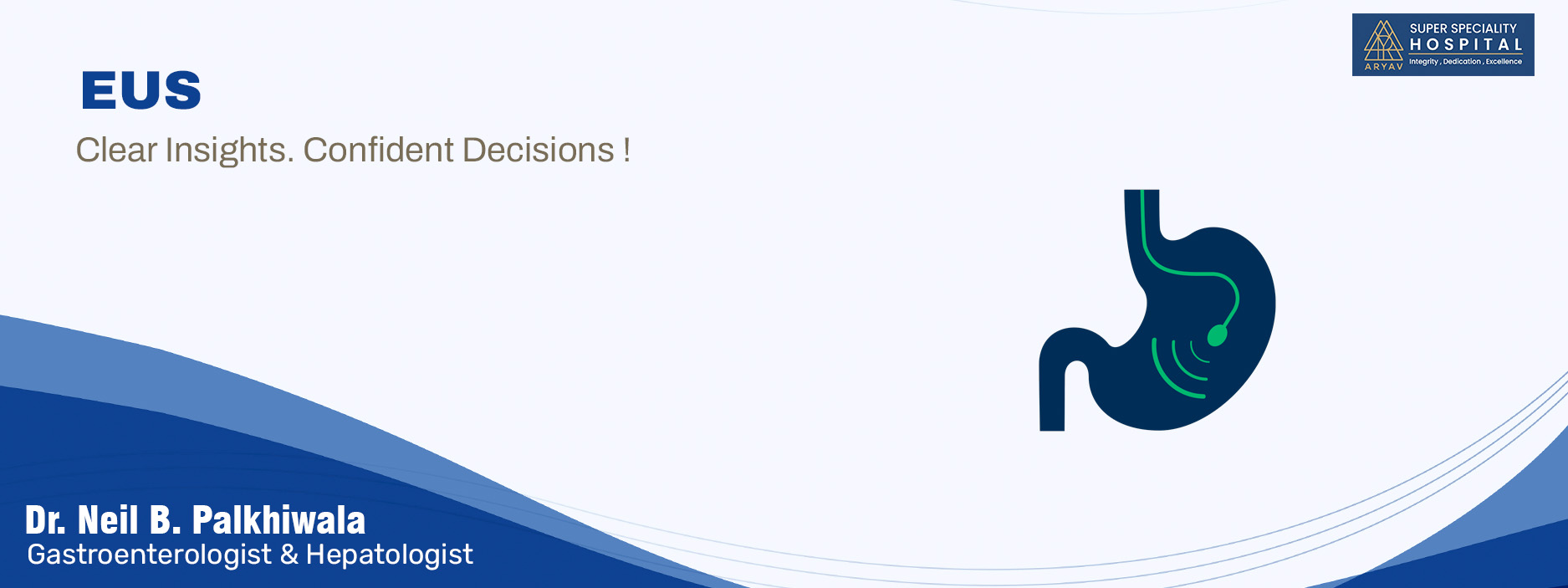
What Is EUS?
Endoscopic Ultrasound (EUS) is a minimally invasive procedure that combines endoscopy and
ultrasound to obtain detailed images of the digestive tract and surrounding organs, including the
pancreas, liver, lymph nodes, and bile ducts. A special endoscope with an ultrasound probe at
its tip allows doctors to see beyond the surface layers.
Why EUS Is Done?
EUS helps diagnose and stage various gastrointestinal conditions such as:
Types of EUS
The Procedure of EUS
Benefits of EUS (Endoscopic Ultrasound)
Dr.Neil Palkhiwala- EUS Specialist in Ahmedabad
Endoscopic ultrasound (EUS) allows detailed evaluation of the gastrointestinal tract and surrounding organs with exceptional accuracy. Its effectiveness depends largely on the expertise of the specialist performing and interpreting the procedure. Therefore, patients undergoing EUS often seek evaluation by the best Gastroenterologist in Ahmedabad for reliable diagnosis and informed treatment planning.
Schedule your EUS procedure with Dr. Neil Palkhiwala- Director and Head Aryav Multispeciality Hospital, Ahmedabad . Call us to book your appointment or ask any questions to +91 91069 95254
Frequently Asked Questions